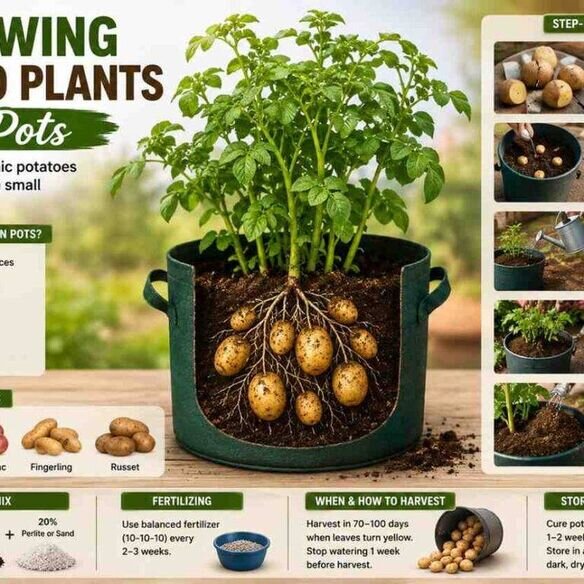
Growing Potato Plants in Pots
Growing Potato Plants in Pots: The Complete Beginner’s Guide
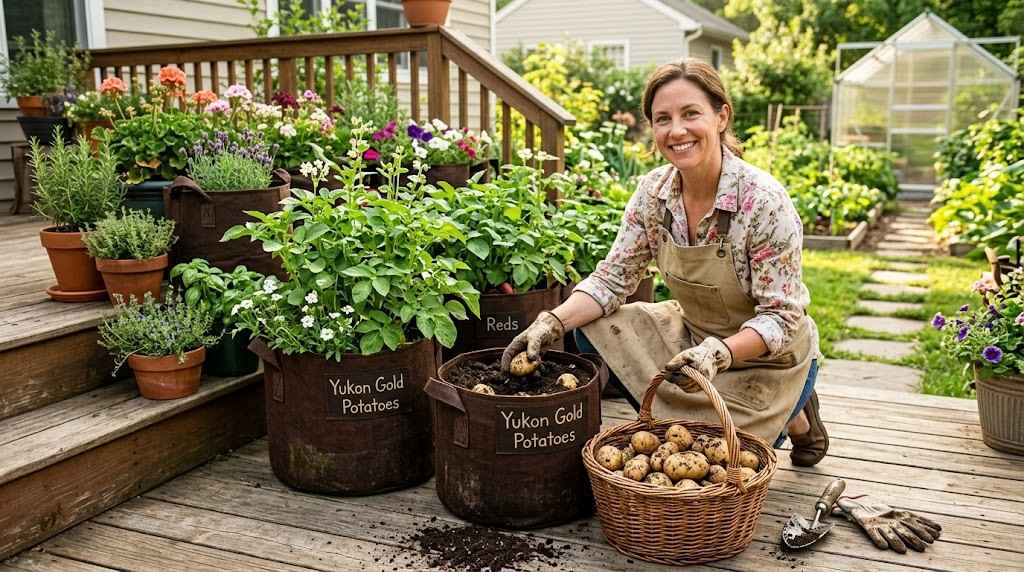
Table of Contents
Introduction
Fresh, homegrown potatoes are one of the most rewarding vegetables you can grow, even if you don’t have a large backyard. Whether you live in an apartment, have a small patio, or simply want a cleaner and more manageable gardening experience, growing potato plants in pots is an excellent solution.
Container gardening has become increasingly popular because it allows gardeners to produce healthy vegetables in limited spaces while maintaining better control over soil quality, watering, and pests. Potatoes adapt surprisingly well to containers, making them an ideal crop for beginners and experienced gardeners alike.
Unlike traditional garden beds, containers warm up faster in spring, reduce the risk of soil-borne diseases, and make harvesting incredibly simple. Instead of digging through heavy soil, you simply empty the container and collect your potatoes.
In this comprehensive guide, you’ll learn everything from selecting the right potato variety and choosing the best container to watering, fertilizing, preventing diseases, and harvesting a productive crop. By following these proven techniques, you can enjoy fresh, delicious potatoes right from your balcony, porch, patio, or backyard.Growing potato plants in pots is becoming increasingly popular among home gardeners because it saves space and produces excellent results.

Why Growing Potato Plants in Pots Is So Popular
Container gardening has transformed how people grow vegetables, especially in urban areas. Instead of requiring large garden beds, potatoes can now thrive in pots, grow bags, buckets, and fabric containers.
One of the biggest advantages is flexibility. Containers can be moved to maximize sunlight, protect plants from severe weather, or create a more organized growing space.
For many gardeners in the USA, container-grown potatoes also reduce common issues such as poor drainage, compacted soil, and weeds.
Growing potatoes in pots also makes gardening more accessible for beginners because the growing process is easier to monitor and maintain.
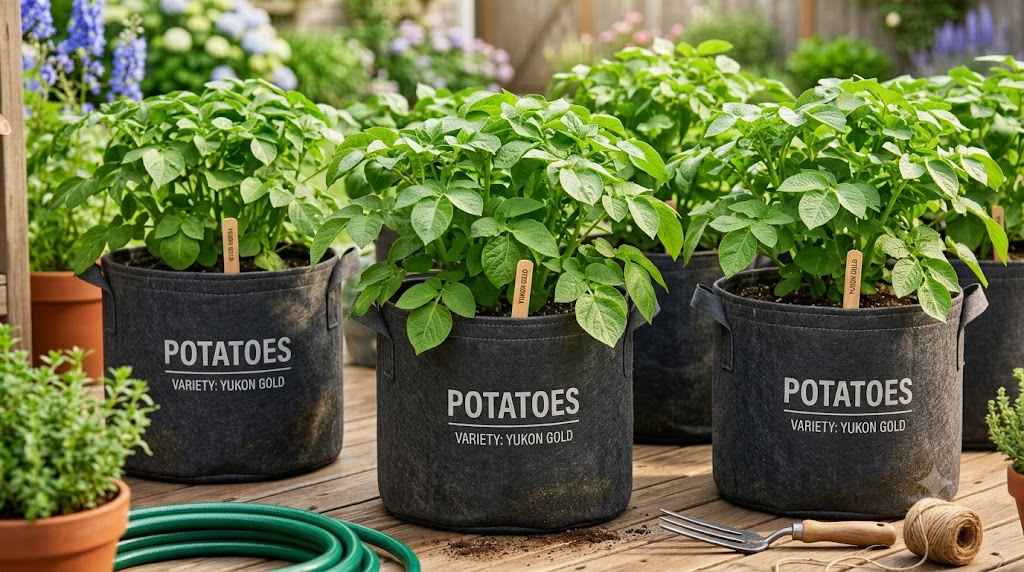
Key Benefits Include
- Ideal for small spaces
- Better soil control
- Easier watering management
- Fewer weeds
- Cleaner potatoes
- Simple harvesting
- Improved drainage
- Reduced disease risk
- Portable containers
- Great for patios and balconies
Comparison Table
| Growing Method | Space Needed | Harvest | Difficulty |
|---|---|---|---|
| Growing Potato Plants in Pots | Small | High | Easy |
| Raised Beds | Medium | High | Medium |
| Ground Planting | Large | High | Medium |
Why Growing Potato Plants in Pots Is Perfect for Home Gardeners
- More people are choosing growing potato plants in pots because it is simple, space-saving, and highly productive. Whether you live in a house with a backyard or an apartment with a sunny balcony, container gardening makes it possible to enjoy fresh, homegrown potatoes without needing a large garden.
- One of the biggest benefits of growing potato plants in pots is the ability to control soil quality, moisture, and drainage more effectively than traditional garden beds. Healthy soil combined with proper watering creates the ideal environment for strong root development and larger potato harvests.
- If you are just starting your gardening journey, growing potato plants in pots is one of the easiest vegetable gardening projects to begin with. By selecting certified seed potatoes, using a large container, and following a consistent care routine, you can harvest delicious potatoes even in a small space.
- With the right techniques, growing potato plants in pots becomes an enjoyable experience that rewards you with fresh vegetables throughout the growing season. Many home gardeners continue growing potato plants in pots every year because it requires less maintenance while producing reliable results.
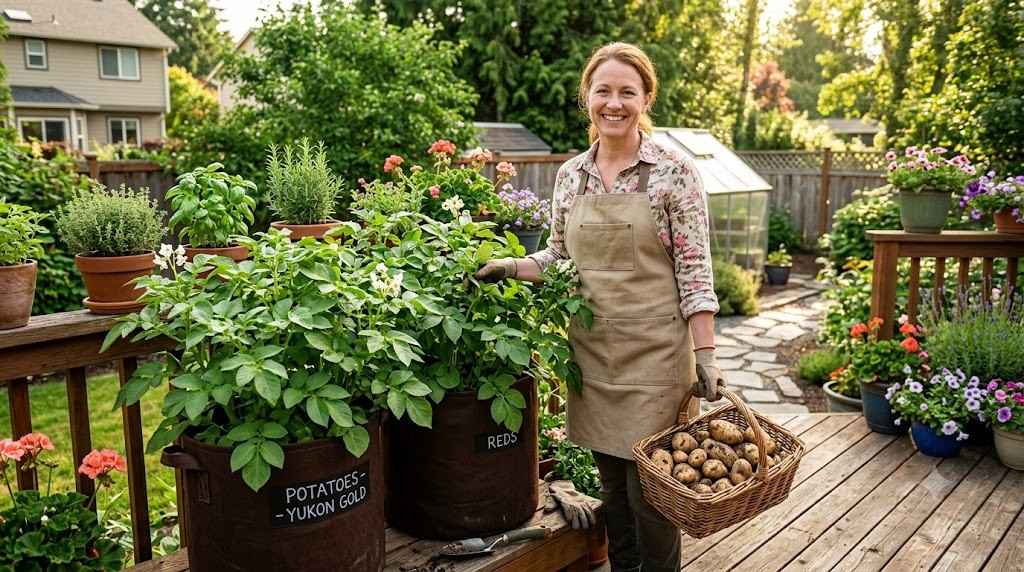
Best Potato Varieties for Containers
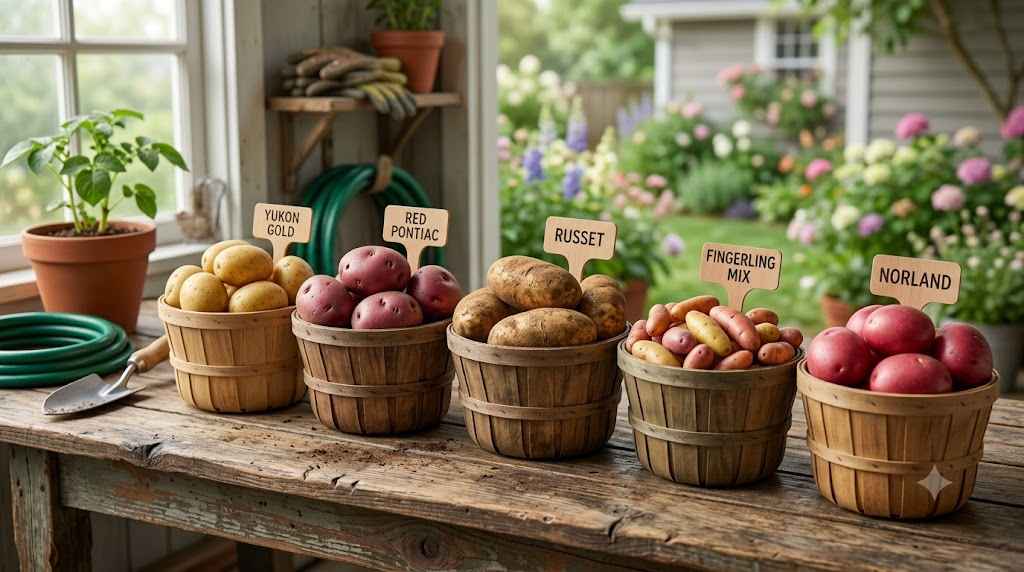
Not every potato variety performs equally well in containers. Choosing the right type significantly increases your harvest.
Generally, early and second-early potatoes perform exceptionally well because they mature faster and require less space.
Best Potato Varieties
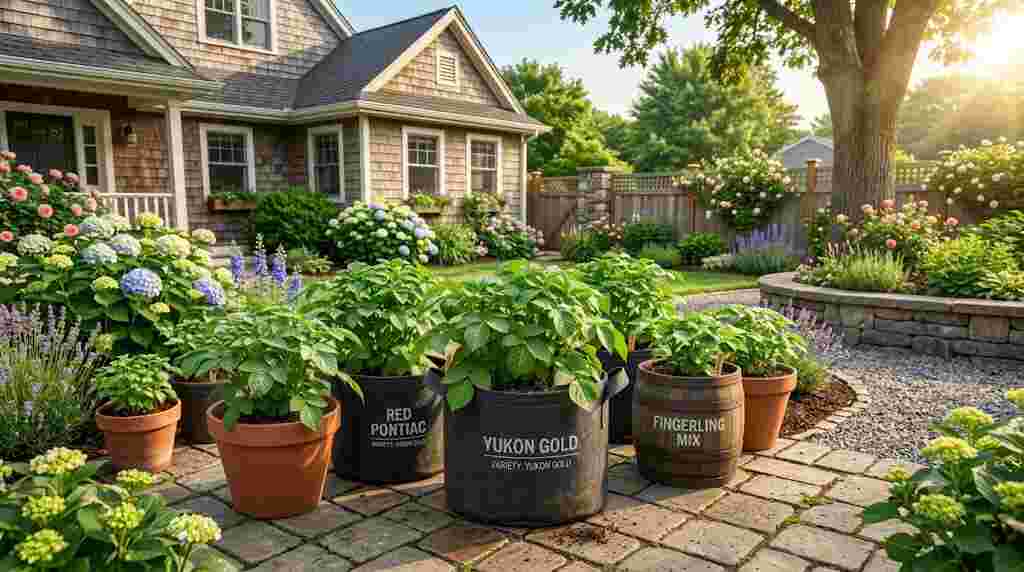
Yukon Gold
A favorite among home gardeners because of its creamy texture and excellent flavor.
Red Pontiac
Produces beautiful red potatoes with consistent yields.
Fingerling Potatoes
Perfect for smaller containers due to their compact growth.
Irish Cobbler
An early producer that performs well in grow bags.
Norland
Excellent for beginners because it matures quickly.
Russet Potatoes
Possible in larger containers but require more growing space.
Choosing the Perfect Container
Selecting the proper container is one of the most important decisions you’ll make.
A container that’s too small limits root growth and reduces potato production.
Recommended Container Size
- Minimum depth: 16–18 inches
- Width: 18–24 inches
- Capacity: 15–20 gallons
Many gardeners prefer fabric grow bags because they improve airflow and naturally prevent root circling.
Good Container Options
- Fabric grow bags
- Plastic nursery pots
- Wooden barrels
- Large buckets
- Resin planters
- Potato towers
Always ensure drainage holes are present to prevent root rot.

Best Soil for Growing Potato Plants in Pots
Potatoes thrive in loose, fertile, well-draining soil.
Avoid using heavy garden soil directly in containers because it compacts easily and restricts root development.
A high-quality container mix produces healthier plants and larger potatoes.
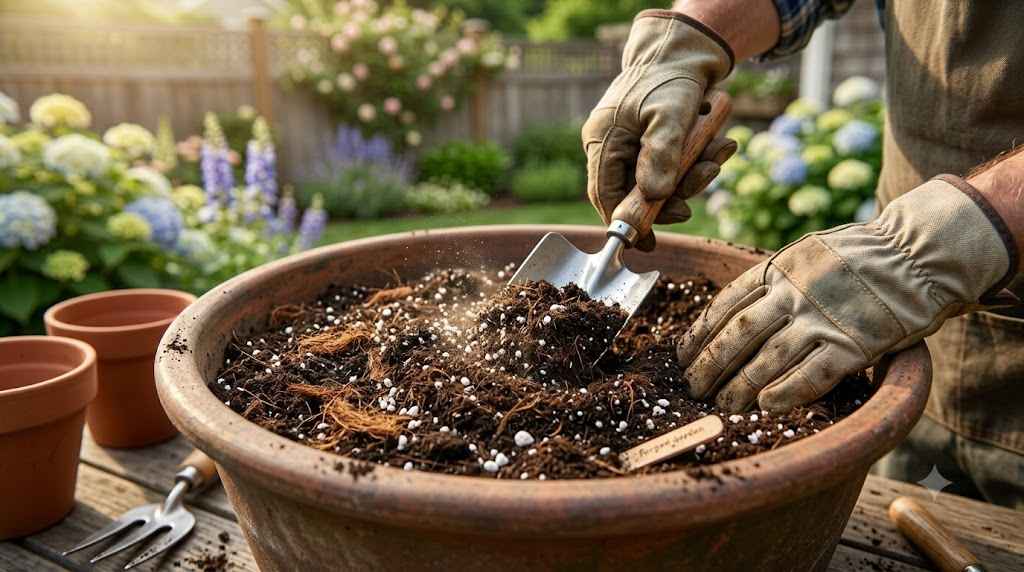
Ideal Soil Recipe
- 40% Premium Potting Mix
- 30% Compost
- 20% Coco Coir
- 10% Perlite
This combination provides:
- Excellent drainage
- Strong root development
- Better moisture retention
- Improved aeration
- Healthy microbial activity
The ideal soil pH ranges from 5.5 to 6.5, which helps reduce the risk of common potato diseases while improving nutrient availability.Step-by-Step Guide to Growing Potato Plants in Pots
Now that you have selected the right potato variety, container, and soil mix, it’s time to plant your potatoes. Following the correct planting method gives your plants the best chance to develop healthy roots and produce a generous harvest. Choosing the right potting mix is one of the most important steps in growing potato plants in pots successfully. Growing potato plants in pots starts with choosing a loose, nutrient-rich potting mix that supports healthy root development.
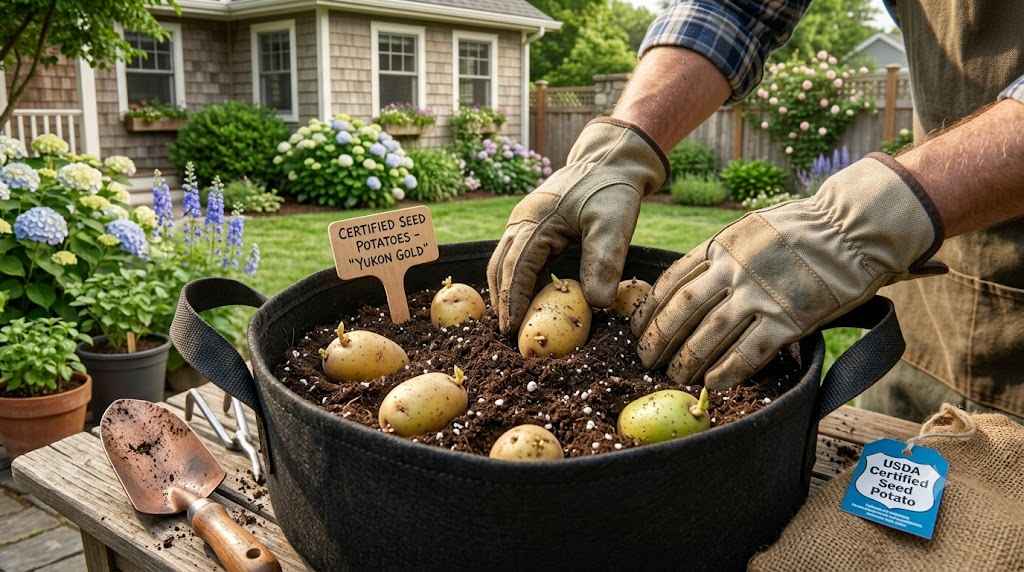
Step 1: Choose Healthy Seed Potatoes
Always use certified seed potatoes instead of grocery store potatoes. Certified seed potatoes are disease-free and specifically grown for planting.
When selecting seed potatoes, look for:
- Firm texture
- Healthy sprouts (also called “eyes”)
- No mold or rot
- No soft spots
- Medium-sized tubers
If your seed potatoes are large, cut them into pieces, making sure each piece has at least two healthy eyes. Let the cut pieces dry for 24–48 hours before planting. This allows the cut surface to heal and helps prevent rot.
Step 2: Prepare Your Container
Before adding soil, make sure your container has enough drainage holes.
Fill the bottom with about 4–6 inches (10–15 cm) of your prepared soil mix. This gives the seed potatoes enough room to establish roots before you gradually add more soil.
Avoid filling the container completely at the beginning. Potatoes need extra soil added as they grow.
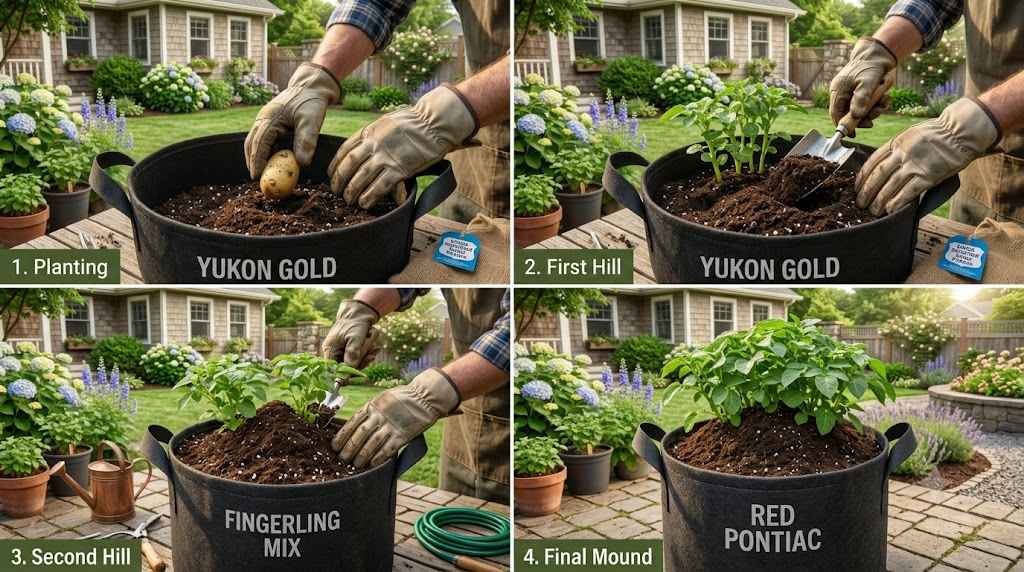
Step 3: Plant the Seed Potatoes
Place the seed potatoes sprout-side up on the soil.
For a standard 15–20 gallon container:
- Plant 2–3 seed potatoes
- Space them 6–8 inches apart
- Cover with 3–4 inches of soil
Water the container thoroughly after planting. The soil should be moist but never soggy.
Understanding the Hilling Method
Hilling is one of the most important techniques for growing potato plants in pots successfully.
As the stems grow, new potatoes develop along the buried portion of the stem. By adding more soil, you encourage the plant to produce additional tubers while protecting them from sunlight.
How to Hill Potatoes
When the plant reaches 6–8 inches tall:
- Add 3–4 inches of fresh soil
- Leave the top leaves exposed
- Repeat every 1–2 weeks until the container is nearly full
Never bury the entire plant. Always keep the top foliage above the soil.
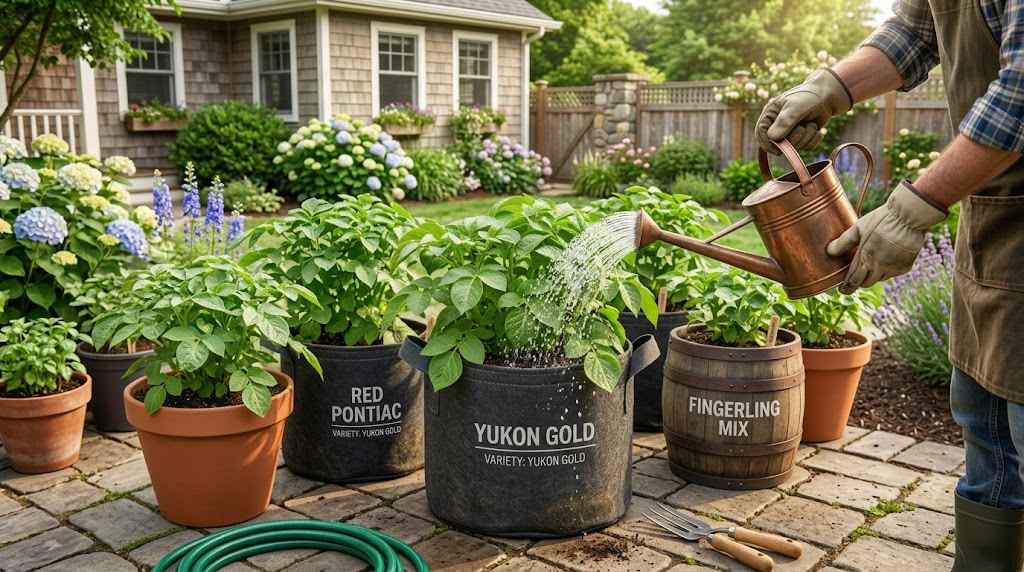
Watering Potato Plants Correctly
Water management has a direct impact on potato size, quality, and yield.
Potatoes dislike both drought and waterlogged soil.
General Watering Guidelines
- Water deeply rather than lightly.
- Check the top 1–2 inches of soil daily.
- Water when the surface begins to dry.
- Keep the soil consistently moist throughout the growing season.
During hot summer weather, containers dry out much faster than garden beds, so daily monitoring is important.
Signs of Underwatering
- Drooping leaves
- Dry soil
- Slow growth
- Small potatoes
- Early yellowing
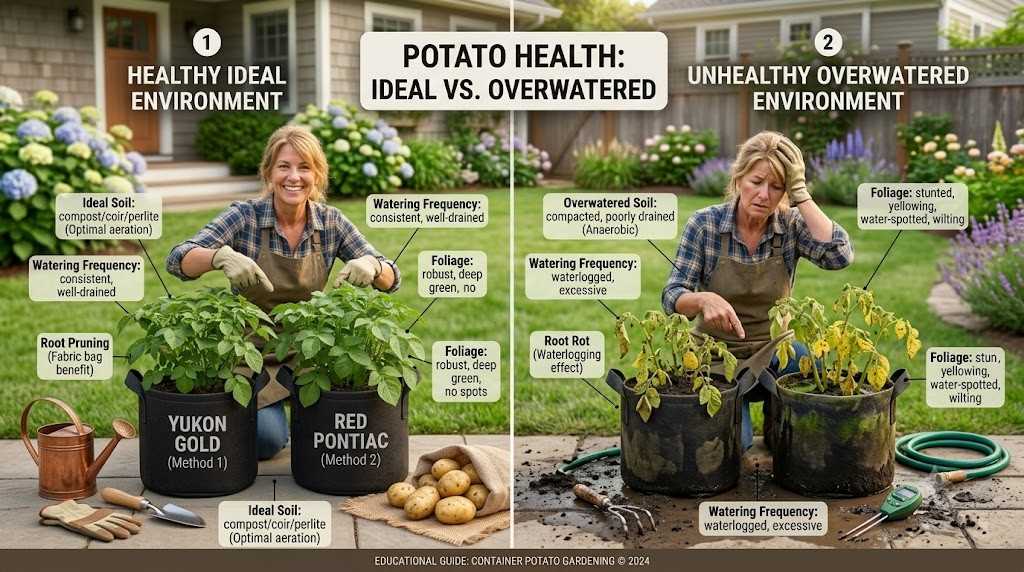
Signs of Overwatering
- Yellow leaves
- Mushy stems
- Foul-smelling soil
- Root rot
- Poor tuber development
A simple moisture meter can help beginners avoid watering mistakes. Consistent moisture is essential when growing potato plants in pots, especially during warm summer months. Proper watering is one of the keys to growing potato plants in pots successfully throughout the season.
How Much Sunlight Do Potatoes Need?
Sunlight plays a major role in healthy potato production.
For the best results, place containers where they receive:
- 6–8 hours of direct sunlight every day
Morning sunlight is especially beneficial because it helps dry excess moisture from the leaves, reducing the risk of fungal diseases.
If you live in a very hot region, providing light afternoon shade during extreme heat can reduce plant stress without affecting growth. Healthy sunlight exposure plays a vital role in growing potato plants in pots and improving overall plant growth.
Fertilizing for Bigger Harvests
Potatoes are heavy feeders, which means they need a steady supply of nutrients throughout the growing season.
Choose a fertilizer that is lower in nitrogen and higher in phosphorus and potassium. Too much nitrogen encourages leafy growth but can reduce potato production.
Fertilizing Schedule
At Planting
- Mix compost into the soil.
- Add a balanced slow-release vegetable fertilizer.
After 3–4 Weeks
- Feed with a fertilizer designed for root crops.
Every 2–3 Weeks
- Apply a liquid vegetable fertilizer according to the label instructions.
Stop fertilizing once the foliage begins to yellow naturally before harvest. Proper feeding throughout the season makes growing potato plants in pots more productive and rewarding. Regular feeding makes growing potato plants in pots more productive and helps increase potato size.
Mulching Your Containers
Adding mulch on top of the soil helps create a healthier growing environment.
Benefits of mulching include:
- Retains soil moisture
- Reduces temperature fluctuations
- Suppresses weeds
- Protects developing tubers from sunlight
- Reduces watering frequency
Suitable mulch materials include:
- Straw
- Shredded leaves
- Pine needles
- Untreated grass clippings (dry)
- Coco chips
Avoid thick layers that block airflow around the stems.
Common Problems While Growing Potato Plants in Pots
Even with proper care, you may encounter a few common issues. Identifying them early can save your crop.
Yellow Leaves
Possible causes:
- Overwatering
- Nutrient deficiency
- Natural aging near harvest
Poor Potato Production
Possible reasons:
- Small container
- Too much nitrogen
- Lack of sunlight
- Insufficient hilling
Green Potatoes
Green potatoes develop when tubers are exposed to sunlight. These potatoes contain higher levels of solanine and should not be eaten.
Always keep developing potatoes covered with soil or mulch.
Cracked Potatoes
Usually caused by inconsistent watering. Keep soil moisture as even as possible throughout the growing season.
Easy Maintenance Tips
To keep your plants healthy:
- Remove dead or damaged leaves.
- Rotate containers occasionally if one side receives less sunlight.
- Keep weeds out of the container.
- Inspect plants weekly for pests or diseases.
- Clean gardening tools before use to reduce disease spread.
Healthy maintenance habits often make the difference between an average harvest and an excellent one.Common Pests and Diseases When Growing Potato Plants in Pots
One of the biggest advantages of container gardening is that potato plants usually experience fewer problems than those grown directly in the ground. However, regular inspection is still essential to keep your plants healthy and productive.
Checking your potato plants every few days allows you to catch problems early before they become serious.

Aphids
Aphids are tiny insects that feed on plant sap. They often gather on young stems and the undersides of leaves.
Signs
- Curled leaves
- Sticky residue on foliage
- Slow plant growth
- Small green, black, or white insects
How to Control Aphids
- Spray plants with a strong stream of water.
- Apply insecticidal soap.
- Use neem oil in the evening.
- Encourage beneficial insects like ladybugs.
Colorado Potato Beetles
This is one of the most destructive pests affecting potato plants.
Both adult beetles and larvae feed aggressively on leaves.
Signs
- Large holes in leaves
- Orange eggs underneath leaves
- Yellow-and-black striped beetles
Prevention
- Inspect plants weekly.
- Remove beetles by hand.
- Destroy egg clusters.
- Use floating row covers during early growth.
Slugs and Snails
These pests are most active during cool, damp conditions.
Signs
- Irregular holes in leaves
- Slime trails
- Damaged young shoots
Prevention
- Water in the morning.
- Keep containers clean.
- Remove hiding places.
- Use pet-safe slug traps if necessary.
Common Potato Diseases
Although containers reduce disease pressure, problems can still occur if growing conditions are poor.
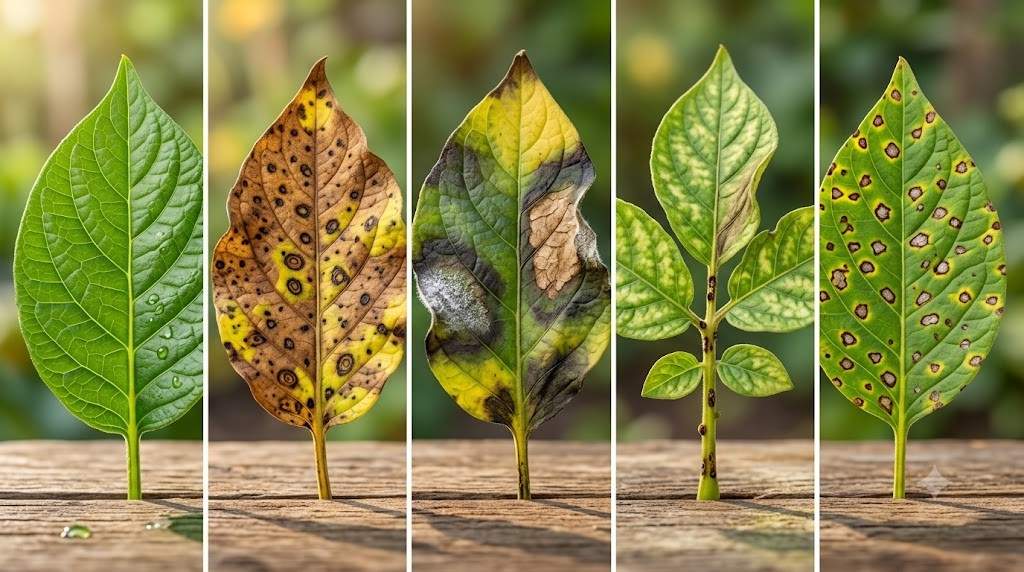
Early Blight
Symptoms include:
- Brown spots on older leaves
- Yellow rings around lesions
- Premature leaf drop
Prevention
- Avoid wet foliage.
- Improve air circulation.
- Remove infected leaves immediately.
Late Blight
Late blight spreads quickly during cool, humid weather.
Symptoms
- Dark brown patches
- Black stems
- Rapid plant collapse
Prevention
- Water the soil, not the leaves.
- Space containers properly.
- Remove infected plants immediately.
- Never compost diseased potato plants.
Root Rot
Root rot usually develops because of poor drainage.
Signs
- Yellow foliage
- Wilting despite wet soil
- Soft roots
- Bad smell from the container
Prevention
- Use well-draining soil.
- Ensure drainage holes remain open.
- Avoid overwatering.
How to Know When Potatoes Are Ready to Harvest
Knowing the right harvest time is essential for getting the best flavor and storage life. One of the biggest advantages of growing potato plants in pots is the simple and clean harvesting process.
New Potatoes
Harvest about 8–10 weeks after planting, while plants are still green.
These potatoes have:
- Thin skin
- Tender texture
- Excellent flavor
- Short storage life
Mature Potatoes
Wait until:
- Leaves turn yellow.
- Stems dry naturally.
- Foliage dies back.
This usually happens 90–120 days after planting, depending on the variety.
Allow the potatoes to remain in the soil for another 1–2 weeks after the foliage dies.
How to Harvest Potatoes from Pots
Harvesting container-grown potatoes is one of the easiest parts of the entire process.
Step-by-Step
- Stop watering about one week before harvest.
- Lay a tarp or sheet on the ground.
- Tip the container onto the tarp.
- Gently remove the soil.
- Collect the potatoes by hand.
- Handle them carefully to avoid bruising.
Never pull potatoes out by the stems, as this can damage the tubers. One of the greatest rewards of growing potato plants in pots is the easy harvesting process.

Curing Potatoes Before Storage
Freshly harvested potatoes should not be stored immediately.
Instead, cure them first.
Curing Process
- Place potatoes in a cool, dark location.
- Maintain good air circulation.
- Leave them for 10–14 days.
- Do not wash them before curing.
Curing thickens the skin and heals small cuts, helping potatoes last much longer in storage.
Best Storage Tips
Once cured, store potatoes in:
- A cool place (45–50°F / 7–10°C)
- Complete darkness
- Low humidity
- Breathable bags or baskets
Avoid storing potatoes:
- In direct sunlight
- Inside sealed plastic bags
- Near onions (they release gases that can shorten potato storage life)
Properly stored potatoes can last 3–6 months, depending on the variety and storage conditions.

Expert Tips for Growing Potato Plants in Pots
Professional gardeners often follow a few extra practices that significantly improve harvest quality.
1. Rotate Crops
Avoid planting potatoes in the same potting mix year after year. Replace or refresh the soil to reduce disease buildup.
2. Choose Certified Seed Potatoes
Certified seed potatoes are healthier and more productive than grocery store potatoes.
3. Water Consistently
Keep moisture levels even. Fluctuating soil moisture can cause cracked or misshapen potatoes.
4. Feed Plants Regularly
Use a balanced fertilizer early in the season, then switch to one higher in phosphorus and potassium once tubers begin forming.
5. Keep Tubers Covered
Never allow developing potatoes to be exposed to sunlight. Cover them with additional soil or mulch to prevent greening.
6. Grow More Than One Variety
Planting early, mid-season, and late varieties extends your harvest and lets you compare which performs best in your climate.
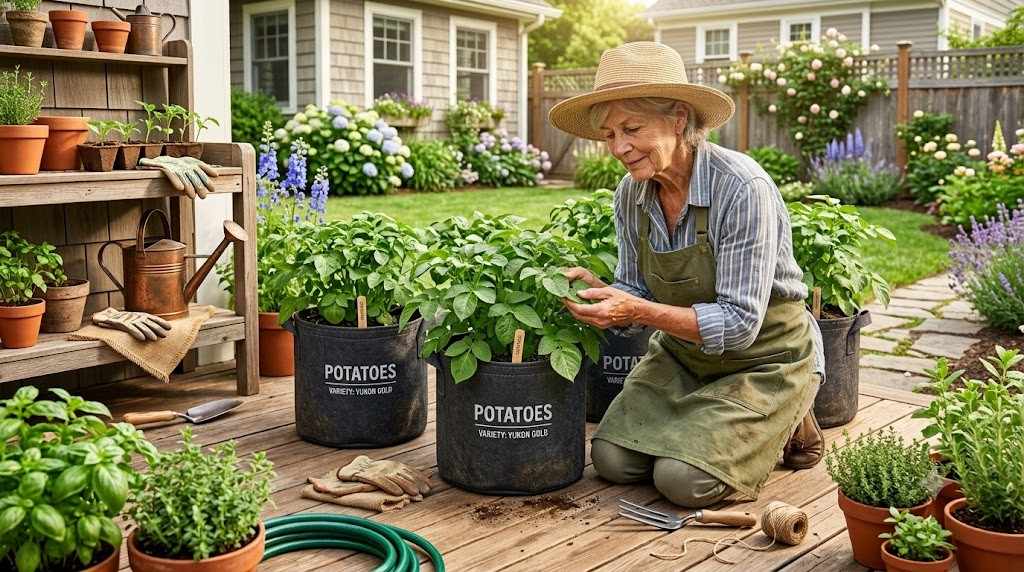
Pro Tips for Bigger Potato Harvests
Professional gardeners recommend checking your containers regularly throughout the season. Healthy plants produce better yields when they receive consistent care and attention.
For the best results, remember these simple practices:
- Rotate containers to ensure even sunlight.
- Water deeply whenever the top layer of soil becomes dry.
- Apply a balanced fertilizer according to the plant’s growth stage.
- Hill the soil regularly to protect developing tubers.
- Inspect plants weekly for pests and diseases.
Following these recommendations makes growing potato plants in pots easier for beginners and helps experienced gardeners achieve healthier plants and larger harvests.
Biggest Mistakes to Avoid
Many beginner gardeners make avoidable mistakes that reduce yields.
Steer clear of these common problems:
- Using containers without drainage holes
- Overwatering the soil
- Allowing soil to dry out completely
- Planting too many seed potatoes in one pot
- Skipping the hilling process
- Using heavy garden soil instead of a quality potting mix
- Growing potatoes in less than six hours of sunlight
- Applying too much nitrogen fertilizer
- Harvesting too early
- Storing potatoes before curing
Avoiding these mistakes can dramatically improve both the quantity and quality of your harvest.
Frequently Asked Questions (FAQs)
1. Can you grow potatoes successfully in pots?
Yes. Growing potato plants in pots is one of the easiest and most productive ways to grow potatoes, especially if you have limited garden space. With the right container, quality potting mix, and proper care, you can harvest a healthy crop at home.
2. What size pot is best for growing potatoes?
Choose a container that is at least 15–20 gallons and 16–18 inches deep. Larger containers provide enough room for root development and allow potatoes to form properly.
3. How many potatoes can I grow in one pot?
A 15–20 gallon container usually holds 2–3 seed potatoes, producing anywhere from 10 to 25 potatoes, depending on the variety and growing conditions.
4. How often should I water potato plants in pots?
Water whenever the top 1–2 inches of soil feel dry. During hot summer weather, containers may need watering every day. The goal is to keep the soil consistently moist without becoming waterlogged.
5. Do potatoes need full sun?
Yes. Potato plants grow best with 6–8 hours of direct sunlight each day. Adequate sunlight encourages healthy foliage and larger tubers.
6. What is the best soil for potatoes in containers?
Use a light, well-draining potting mix enriched with compost, coco coir, and perlite. Aim for a soil pH between 5.5 and 6.5 for optimal growth.
7. How long do potatoes take to grow in pots?
Most potato varieties mature in 90–120 days, while new potatoes can often be harvested after 8–10 weeks.
8. Why are my potatoes turning green?
Green potatoes have been exposed to sunlight, causing them to produce solanine, a natural toxin. Keep developing tubers covered with soil or mulch, and avoid eating green potatoes.
9. Is growing potato plants in pots better than growing them in the ground?
Yes. Growing potato plants in pots is often easier than growing potatoes directly in the ground, especially for beginners. Containers provide better control over soil quality, drainage, watering, and pests. Growing potato plants in pots also makes harvesting cleaner and simpler because you can easily empty the container instead of digging through garden soil.

Final Thoughts
Growing your own potatoes is a rewarding experience that combines fresh food, practical gardening skills, and the satisfaction of harvesting a crop you’ve nurtured yourself. Whether you’re gardening on a balcony, patio, deck, or in a small backyard, growing potato plants in pots makes it possible to enjoy homegrown potatoes without needing a large garden.
Success starts with choosing certified seed potatoes, using a spacious container with excellent drainage, and planting in a loose, nutrient-rich potting mix. Throughout the growing season, provide consistent watering, regular fertilization, adequate sunlight, and timely hilling to encourage strong root development and abundant tuber production.
By monitoring your plants for pests and diseases, maintaining healthy soil, and harvesting at the right time, you’ll enjoy a cleaner, easier, and more productive gardening experience. Container gardening is not only convenient but also an excellent way to grow fresh vegetables in urban and suburban spaces.
Whether this is your first attempt or you’re looking to improve your results, the techniques shared in this guide will help you grow healthier plants and harvest delicious potatoes season after season. By following this complete guide, growing potato plants in pots can become one of the most successful and enjoyable gardening projects for your home. With the right care, growing potato plants in pots can provide fresh and delicious potatoes every growing season.
Happy gardening!

Final Expert Advice
Successful growing potato plants in pots depends on choosing the right variety, preparing nutrient-rich soil, and maintaining consistent watering throughout the season. With proper sunlight, timely fertilization, and regular hilling, you can enjoy fresh, flavorful potatoes from your own container garden.
Whether your goal is to grow food for your family or simply enjoy home gardening, growing potato plants in pots is a practical and rewarding method that delivers excellent results year after year.
Quick Takeaways
Cure potatoes before long-term storage.
Choose certified seed potatoes for better results.
Use a 15–20 gallon container with drainage holes.
Plant in loose, nutrient-rich, well-draining soil.
Give plants 6–8 hours of direct sunlight daily.
Keep soil consistently moist but not soggy.
Hill plants regularly as they grow.
Feed with a balanced fertilizer, then switch to a higher phosphorus and potassium formula.
Watch for pests and diseases and act early.
Harvest only after foliage dies back naturally.