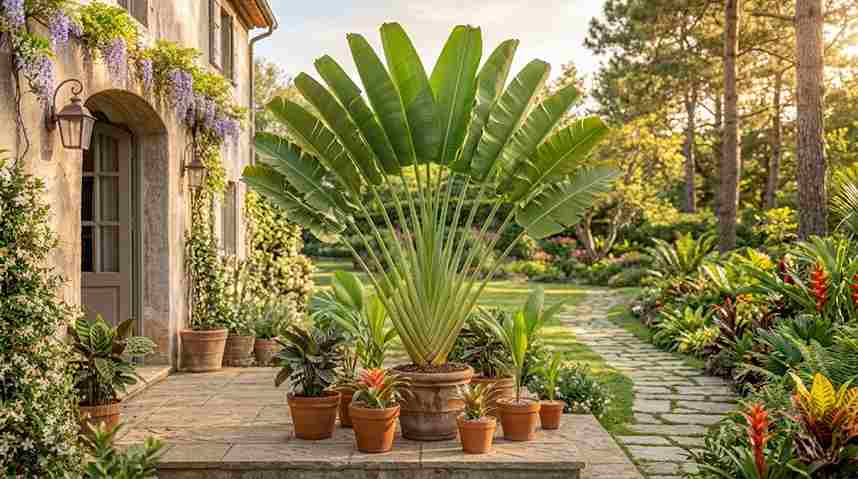
Travel Palm Plant
Travel Palm Plant: Complete Growing and Care Guide
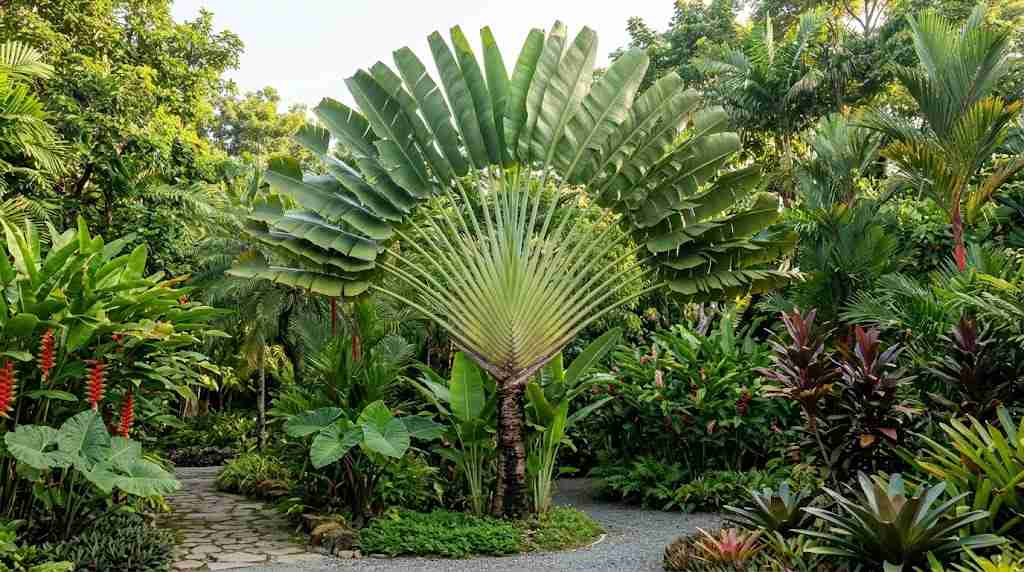
Table of Contents
The travel palm plant, also known as the Traveler’s Palm or Traveler’s Tree, is a striking tropical plant famous for its large, fan-shaped leaves and unusual appearance. It can instantly give a garden, patio, greenhouse, or suitable growing space a lush tropical look.
Although it looks like a palm, the travel palm plant is not a true palm. Its scientific name is Ravenala madagascariensis, and it belongs to the Strelitziaceae family. The plant is native to Madagascar, where it grows naturally in warm tropical conditions.
For gardeners in the United States, understanding its natural growing environment is important before planting one. Warm temperatures, plenty of sunlight, adequate moisture, fertile soil, and protection from cold weather can all contribute to healthier growth.
What Is a Travel Palm Plant?
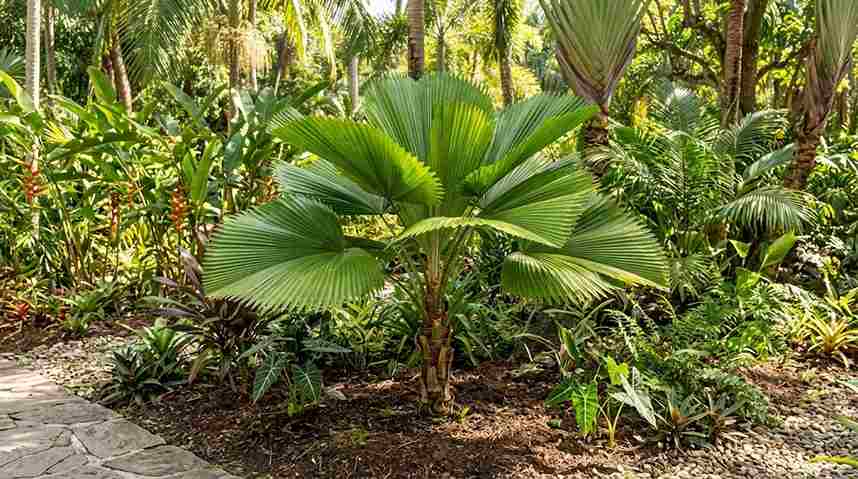
The travel palm plant is a large tropical species known for its dramatic fan-shaped foliage. Its scientific name, Ravenala madagascariensis, is often associated with Madagascar, its native home.
The leaves are arranged in a distinctive fan pattern, creating an architectural appearance that makes the plant easy to recognize. As the plant matures, it can develop a tall trunk-like structure and become an impressive landscape specimen.
Unlike many small houseplants, this species has the potential to become quite large. North Carolina State University Extension reports that plants can reach approximately 30 to 50 feet in their native habitat under suitable conditions.
For this reason, gardeners should think about the plant’s eventual size before choosing a permanent planting location.
Main Characteristics
Some of the most noticeable characteristics include:
- Large tropical leaves
- Fan-shaped foliage
- Tall, tree-like growth when mature
- Tropical appearance
- Origin in Madagascar
- Preference for warm growing conditions
- Sensitivity to freezing temperatures
These characteristics make it especially interesting for gardeners who want to create a tropical-style landscape.
Why Is It Called a Traveler’s Palm?
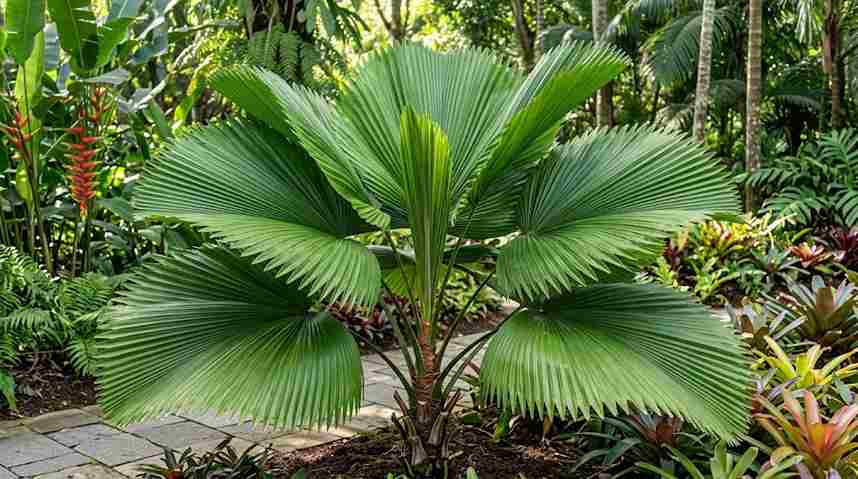
The common name “Traveler’s Palm” is connected with traditional observations about the plant and its relationship with water. The large leaf bases can hold water, although gardeners should not assume that this water is automatically safe to drink.
The name is also associated with the plant’s distinctive fan-shaped leaf arrangement. Its unusual form has made it a recognizable feature of tropical landscapes.
Another interesting point is that the common name can create some confusion. Because the plant is called a palm, many people assume it belongs to the palm family.
Botanically, that is not the case.
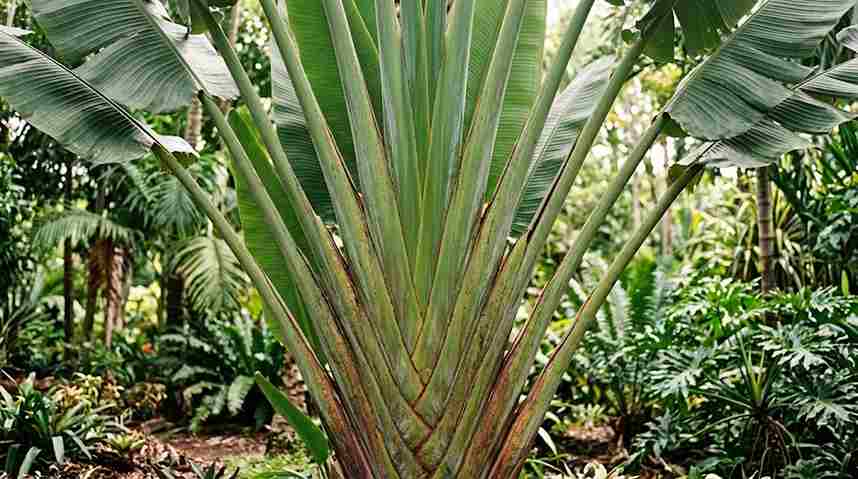
Is a Travel Palm Plant a True Palm?
No, it is not a true palm.
The scientific name is Ravenala madagascariensis, and the plant belongs to the Strelitziaceae family. True palms belong to the Arecaceae family.
The travel palm plant is more closely related to plants such as bird-of-paradise than to actual palm trees. Its palm-like appearance comes from its tall growth and large leaves rather than its botanical classification.
This distinction is useful when researching the plant because searching only for traditional palm-care information may lead to unsuitable recommendations.
Travel palm plant tropical nature means that gardeners should focus on the conditions it naturally prefers rather than treating it exactly like a typical palm.
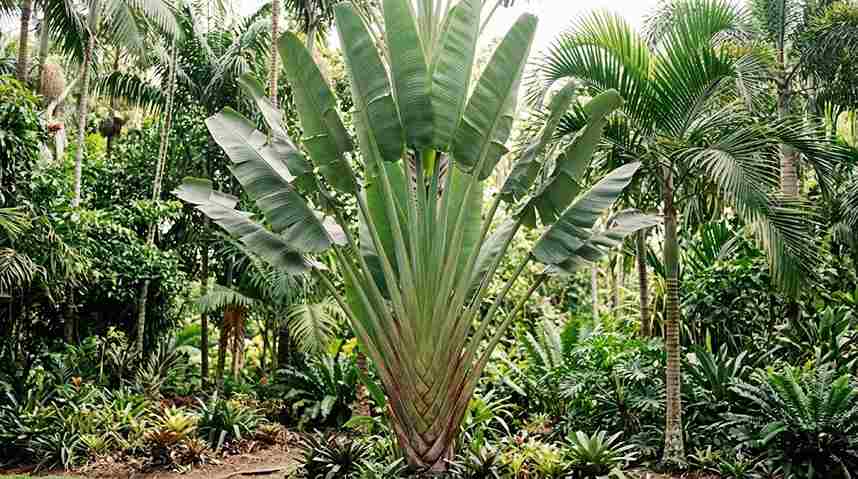
Where Does It Grow Naturally?
The travel palm plant is native to Madagascar, an island country located off the southeastern coast of Africa.
Madagascar contains a remarkable range of plant habitats, and Ravenala madagascariensis is associated with warm tropical environments. Its natural origin helps explain its preference for warmth, moisture, sunlight, and fertile growing conditions.
Travel palm plant is also widely recognized as an ornamental tropical species in suitable climates.
In the United States, it is best suited to warm areas where freezing temperatures are uncommon. University extension resources place it in approximately USDA Hardiness Zones 10A through 11, although exact performance can vary depending on local conditions.
Gardeners living outside these warm zones may need to grow young plants in containers or provide a protected growing environment.
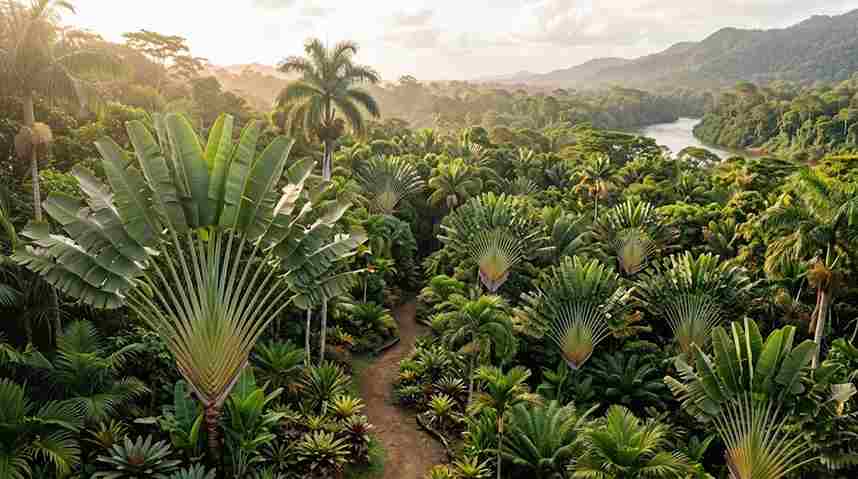
What Makes This Tropical Plant Unique?
Several features make the travel palm plant different from ordinary landscape plants.
Its Fan-Shaped Leaves
Travel palm plant most recognizable feature is its enormous fan-like arrangement of leaves.
Instead of forming a typical rounded canopy, the leaves spread outward from the central growth point. This creates a dramatic shape that works particularly well as a focal point in tropical landscapes.
Its Impressive Size
A mature plant can become much larger than many gardeners initially expect.
This is why spacing is important. A location that looks perfect for a small nursery plant may become unsuitable as the plant grows.
Its Tropical Appearance
The broad green leaves can create a strong tropical atmosphere without requiring a collection of different plants.
When placed correctly, a single mature specimen can become one of the main visual features of a garden.
Its Unusual Botanical Identity
Despite the common name, it is not a palm.
Its relationship with the bird-of-paradise family makes it botanically interesting and gives gardeners another reason to learn about the species beyond its appearance.
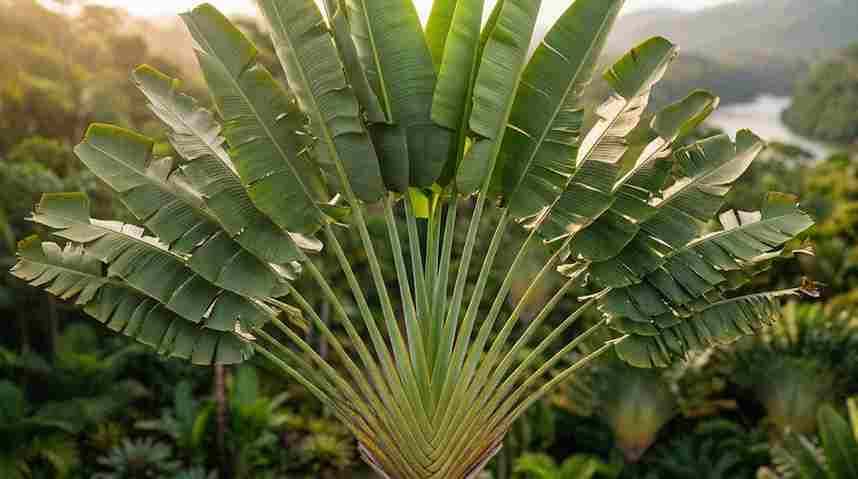
Key Facts About the Travel Palm Plant
| Feature | Details |
|---|---|
| Scientific name | Ravenala madagascariensis |
| Common names | Traveler’s Palm, Traveler’s Tree |
| Plant family | Strelitziaceae |
| Native region | Madagascar |
| Plant type | Tropical perennial/tree-like plant |
| Foliage | Large, fan-shaped leaves |
| Light | Full sun to partial shade |
| Soil | Fertile and well-drained |
| Water | Consistent moisture without waterlogging |
| Cold tolerance | Frost sensitive |
| Best U.S. climate | Warm, frost-free regions |
Understanding these basic characteristics makes it easier to provide the right care later.
The most important thing to remember is that the plant is tropical, large, and frost sensitive. These three factors should guide decisions about where and how to grow it.
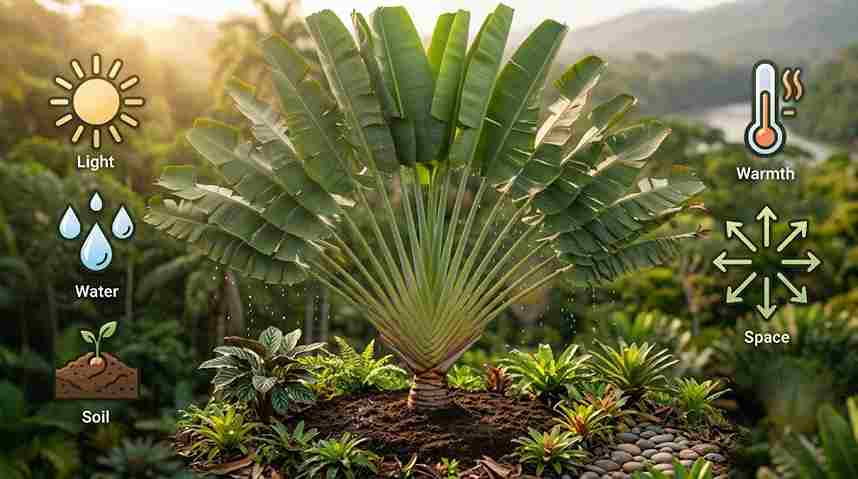
Is It Suitable for U.S. Gardens?
The answer depends heavily on your local climate.
Gardeners in warm parts of the United States may be able to grow the plant outdoors as a landscape specimen. In colder areas, permanent outdoor planting can be difficult because the plant does not tolerate freezing conditions well.
Before planting, check your USDA Hardiness Zone and consider your area’s typical winter temperatures.
If your climate is too cold for outdoor growth, a container can provide more flexibility while the plant is young. However, because mature plants can become very large, indoor overwintering may eventually become difficult.
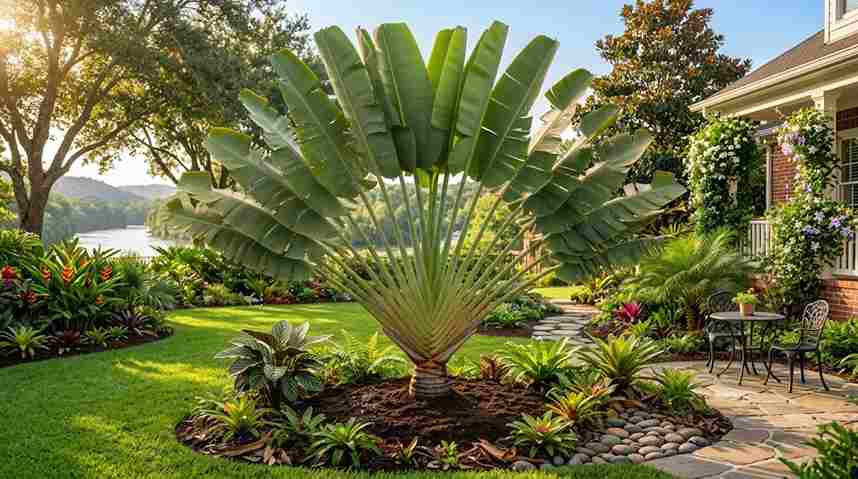
Travel Palm Plant Care Requirements
Once you understand the natural environment of the travel palm plant, the next step is learning how to provide suitable growing conditions. Because Ravenala madagascariensis comes from a tropical environment, it generally performs best when it receives plenty of light, warmth, moisture, and room for its roots to develop.
The good news is that its basic care requirements are straightforward. The most important thing is to maintain a consistent growing environment instead of frequently changing its location or watering routine.
What Light Does a Travel Palm Plant Need?
Light is one of the most important factors for healthy growth. A travel palm plant generally performs best in full sun, although young plants growing in containers can tolerate some shade.
When grown outdoors, choose a location that receives several hours of direct sunlight each day. Strong natural light helps support healthy foliage and vigorous growth.
If a young plant has been growing in a shaded nursery or indoor environment, avoid moving it directly into intense sunlight for an extended period. Gradually increasing its exposure can help reduce stress.
Signs of Inadequate Light
Insufficient light may result in:
- Slow growth
- Smaller or weaker leaves
- Pale-looking foliage
- Uneven growth
- A less attractive overall shape
If travel palm plant is receiving very little natural light, moving it to a brighter location may improve its growing conditions.
However, light is only one part of the equation. Poor watering, cold temperatures, or root problems can also cause weak growth, so consider the complete growing environment before making major changes.
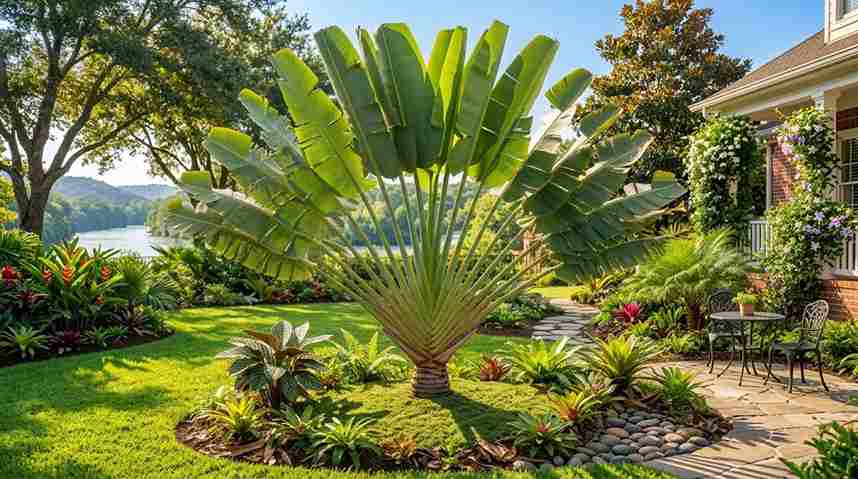
How Much Sunlight Does It Need?
For outdoor growing, full sun is generally the best option.
A location with strong morning and afternoon light can provide the energy the plant needs for active growth. In extremely hot environments, however, newly established plants may benefit from some protection while they adjust.
Travel palm plant large leaves can also be vulnerable to physical damage from strong winds. A location that provides good sunlight while offering some protection from damaging winds can be a practical choice.
Remember that the ideal location should provide more than sunlight. It should also have enough room for the plant to expand as it matures.
How Often Should You Water a Travel Palm Plant?
Watering should focus on maintaining consistent moisture without creating waterlogged soil.
There is no single watering schedule that works for every garden. Temperature, rainfall, soil type, container size, humidity, and sunlight can all affect how quickly the soil dries.
Instead of watering automatically on a specific day, check the soil and observe the plant.
During hot and dry weather, the plant may need more frequent watering. During rainy periods or cooler weather, natural moisture may reduce the need for additional irrigation.
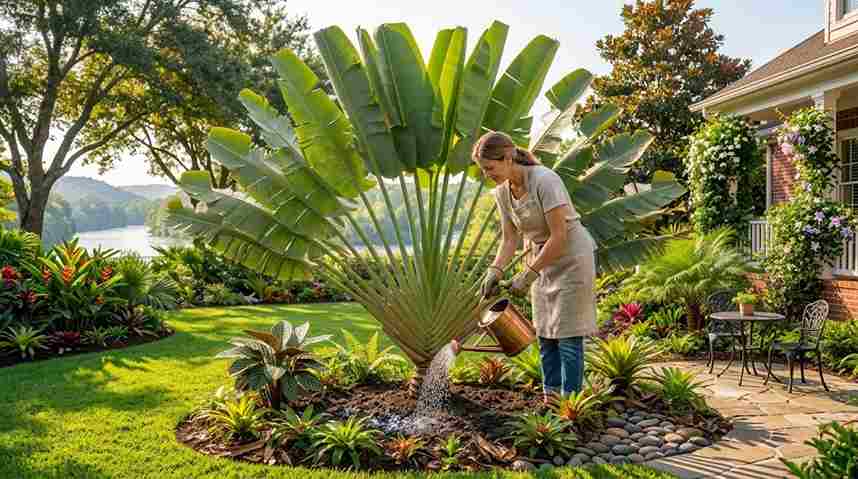
A Simple Watering Method
Follow these basic steps:
- Check the soil before watering.
- Water thoroughly when the plant needs moisture.
- Allow excess water to drain away.
- Avoid keeping the roots in standing water.
- Adjust watering according to the season and weather.
The goal is not to keep the soil permanently soaked. Healthy roots need both moisture and access to air within the growing medium.
Can You Overwater a Travel Palm Plant?
Yes.
Overwatering is one of the problems gardeners should avoid. Constantly saturated soil can reduce healthy root function and create conditions that encourage root problems.
If the soil remains wet for a long time, check whether the container or planting area drains properly.
Travel palm plant that appears thirsty is not always suffering from a lack of water. Root damage caused by excessive moisture can also lead to drooping or unhealthy foliage.
For this reason, always check the soil before adding more water.
What Soil Is Best?
The travel palm plant prefers fertile, organic-rich, well-drained soil.
Good drainage is especially important because the plant appreciates moisture but does not perform well when its roots remain in stagnant water for extended periods.
For outdoor planting, improve poor soil with suitable organic matter when necessary. Avoid creating a compact growing area that holds excessive water around the roots.
For containers, choose a quality potting mix that drains efficiently rather than using dense garden soil.
Ideal Soil Characteristics
Good growing soil should be:
- Fertile
- Well drained
- Rich in organic matter
- Able to retain some moisture
- Loose enough for healthy root development
The exact soil texture can vary, but drainage should always remain a priority.
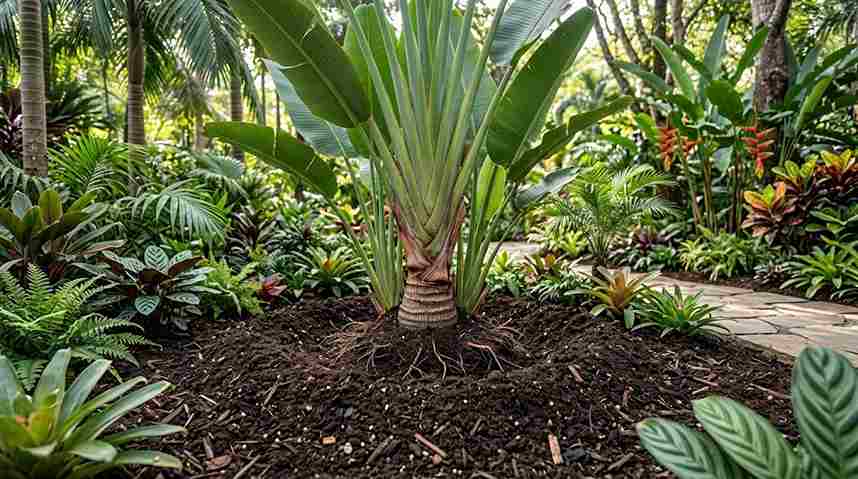
Temperature Requirements
Warm temperatures are essential because Travel palm plant is a tropical plant.
It is sensitive to cold and should be protected from freezing temperatures. North Carolina State University Extension notes that the plant does not tolerate temperatures below approximately 40°F.
This makes outdoor cultivation much easier in warm regions of the United States than in areas with cold winters.
What Happens During Cold Weather?
Cold temperatures can cause stress or damage to tropical foliage.
If you live in a region where temperatures regularly fall below the plant’s preferred range, consider growing a young specimen in a container or protected environment.
Gardeners should check the local weather forecast when unusually cold conditions are expected and move container-grown plants to a protected location when appropriate.
For permanently planted specimens, choosing a suitable climate is much more reliable than attempting to protect a large mature plant every winter.
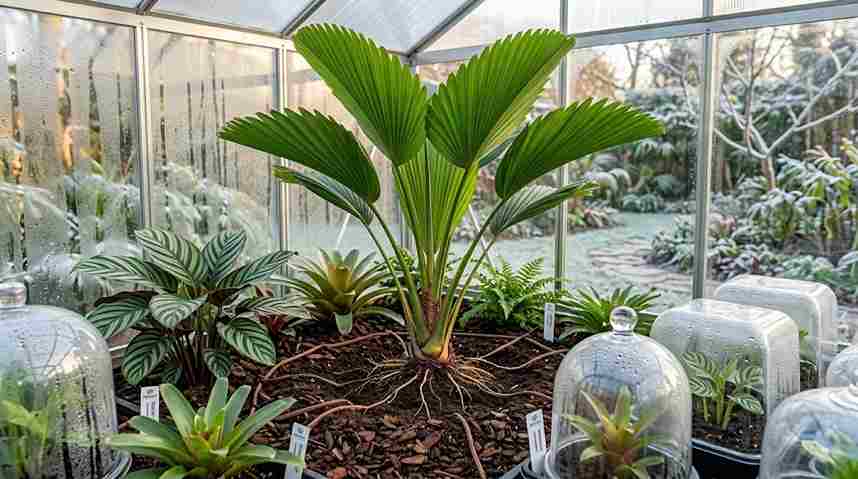
Humidity Requirements
Because the plant originates from a tropical environment, it generally appreciates moderate to high humidity.
Outdoor plants growing in naturally humid climates may receive sufficient moisture from the surrounding environment.
Indoor or protected plants may experience drier conditions, especially during winter when heating systems reduce indoor humidity.
If growing a young plant indoors temporarily, keep it away from direct heat sources such as radiators, heaters, and hot air vents.
Good air circulation is also important. High humidity combined with stagnant air can create an environment where some leaf diseases become more likely.
How to Fertilize a Travel Palm Plant
Fertilizing can support healthy growth when the plant is actively growing and the soil does not provide enough nutrients.
Use a balanced fertilizer suitable for tropical ornamental plants and follow the manufacturer’s instructions carefully.
More fertilizer does not automatically mean faster or healthier growth. Applying excessive amounts can damage roots or create nutrient imbalances.
When Should You Fertilize?
Fertilization is generally most useful during active growth.
During cooler periods, growth may slow naturally, reducing the plant’s nutritional requirements.
Before adding fertilizer, check the basics first:
- Is the plant receiving enough light?
- Is the soil draining properly?
- Is watering consistent?
- Are temperatures suitable?
- Is the plant showing signs of root stress?
If these conditions are poor, fertilizer alone will not solve the underlying problem.
Does a Travel Palm Plant Need Pruning?
Regular heavy pruning is not usually necessary.
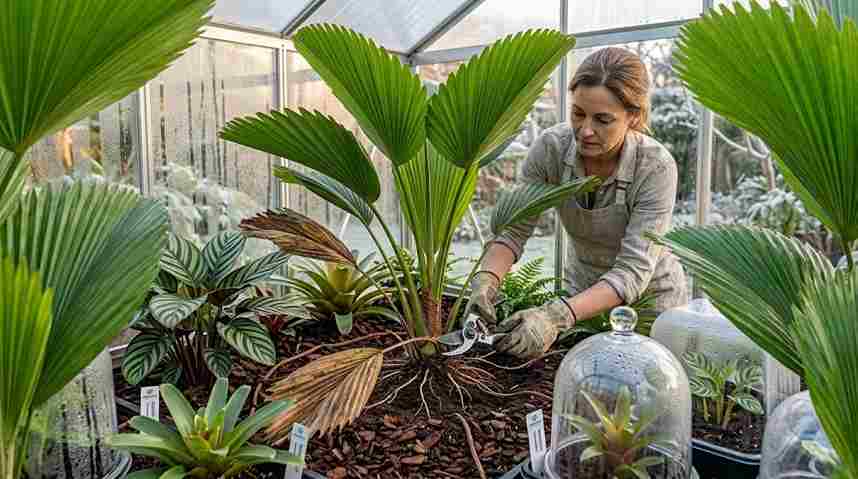
The main purpose of pruning is to remove dead, severely damaged, or unwanted foliage and maintain an attractive appearance.
Use clean, sharp pruning tools when removing damaged leaves. Avoid cutting healthy foliage unnecessarily because the large leaves are one of the plant’s most distinctive features.
Dealing With Wind Damage
The Travel palm plant large leaves can be torn or shredded by strong winds.
This does not always mean the plant is unhealthy. Tropical plants with broad leaves can naturally experience physical leaf damage in exposed locations.
If wind damage is common, consider moving a container plant to a more sheltered position or choosing a protected planting location for an outdoor specimen.
How Much Space Does It Need?
Space planning is extremely important.
A small nursery plant may look manageable when you first bring it home, but Ravenala madagascariensis can become a large landscape plant under suitable conditions.
North Carolina State University Extension reports that it can reach approximately 30–50 feet in its native environment, while other extension guidance provides smaller landscape height ranges depending on growing conditions.
For this reason, avoid planting it directly beneath structures, power lines, or in a narrow area where mature growth will become restricted.
Give the Plant Room to Grow
Before planting, consider:
- Mature height
- Mature width
- Root space
- Nearby buildings
- Walkways
- Utility lines
- Neighboring plants
- Wind exposure
Good planning at planting time can prevent major problems later.
Quick Care Checklist
Use this checklist as a simple reminder:
- Light: Provide strong light and full sun when practical.
- Water: Keep moisture consistent but avoid waterlogged soil.
- Soil: Choose fertile, organic-rich soil with good drainage.
- Temperature: Protect the plant from freezing conditions.
- Humidity: Tropical conditions with reasonable humidity are beneficial.
- Fertilizer: Feed during active growth according to product directions.
- Pruning: Remove dead or severely damaged leaves when necessary.
- Space: Allow plenty of room for mature growth.
- Wind: Choose a location that reduces severe wind exposure.
Growing and Maintaining a Travel Palm Plant
A healthy travel palm plant needs more than sunlight and water. As it grows, gardeners also need to think about container size, repotting, pruning, propagation, pests, diseases, and environmental stress.
Understanding these issues early can make plant care much easier. It also helps you recognize whether a problem is caused by watering, light, temperature, soil, or physical damage.
How to Grow a Travel Palm Plant in a Container
Growing a young plant in a container can be a useful option for gardeners who want greater control over its growing environment.
Container growing is especially practical in areas where winter temperatures become too cold for tropical plants. A container allows a young specimen to be moved to a sheltered location when necessary.
However, remember that this is a large tropical species. A container can control its root space temporarily, but it does not prevent the plant from eventually becoming large.
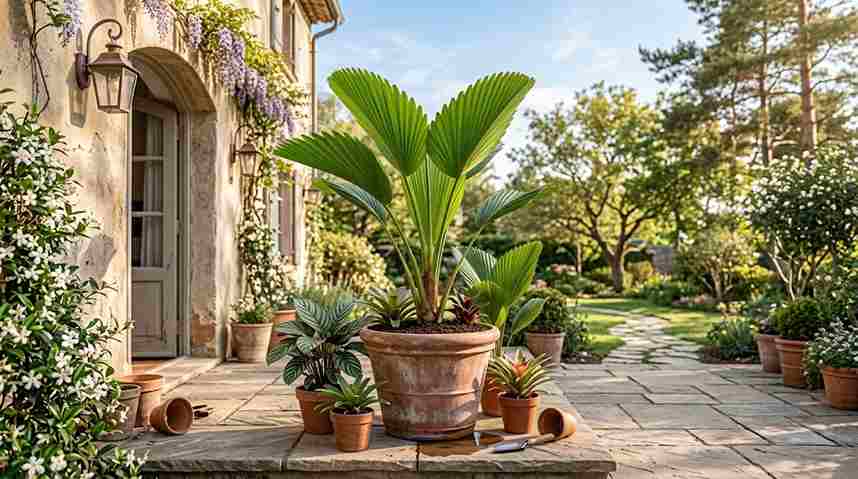
Choose the Right Container
Select a sturdy container with drainage holes at the bottom.
The container should be large enough to support the plant without being excessively oversized. A very large container filled with wet soil can retain moisture for longer than necessary.
As the plant grows, its container may need to be upgraded.
Container Care Tips
Keep the following points in mind:
- Use a container with drainage holes.
- Choose a fertile, well-draining potting mix.
- Avoid leaving water in the drainage tray.
- Place the container in a bright location.
- Monitor soil moisture more frequently during hot weather.
- Protect the plant from freezing temperatures.
- Repot when the roots become restricted.
Container-grown plants often dry out faster than plants growing directly in the ground, particularly during hot and sunny weather. Check the soil regularly rather than relying on a fixed watering schedule.
How to Repot a Travel Palm Plant
Repotting is mainly necessary for younger container-grown plants.
Signs that a plant may need more space include roots filling the container, restricted growth, or the plant becoming unstable in its current pot.
Choose a new container that is moderately larger than the existing one.
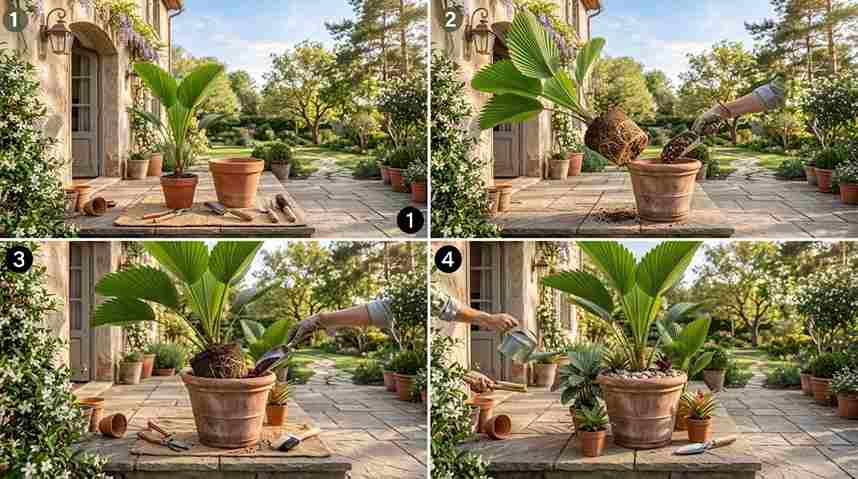
Step-by-Step Repotting Travel palm plant
Step 1: Prepare the new container
Make sure the new pot has adequate drainage holes and fill it partially with fresh, well-draining potting mix.
Step 2: Remove the plant carefully
Gently loosen the plant from its existing container. Avoid pulling aggressively on the leaves or stem.
Step 3: Inspect the roots
Look for healthy, firm roots and remove obviously damaged material with clean tools if necessary.
Step 4: Position the plant
Place the plant at approximately the same depth it was growing previously.
Step 5: Add fresh soil
Fill the space around the root ball with potting mix and gently firm it into place.
Step 6: Water thoroughly
Water after repotting and allow excess moisture to drain completely.
After repotting, give the plant stable conditions while it adjusts to its new container.
Pruning and Maintenance
One of the attractive features of this tropical plant is its large foliage, so unnecessary pruning should be avoided.
Remove dead or severely damaged leaves when they no longer contribute to the plant’s appearance or health.
Use clean pruning tools to reduce the risk of transferring contaminants between plants.
Should You Remove Torn Leaves?
Not every torn leaf needs to be removed.
Large tropical leaves can become split or shredded because of wind, physical contact, or environmental stress. A damaged leaf can still contribute to the plant while it remains green and functional.
If only part of a leaf is damaged, you can usually leave it in place unless the appearance bothers you or the damaged area becomes a concern.
Removing every slightly damaged leaf can create unnecessary stress and reduce the plant’s healthy foliage.
How to Propagate It
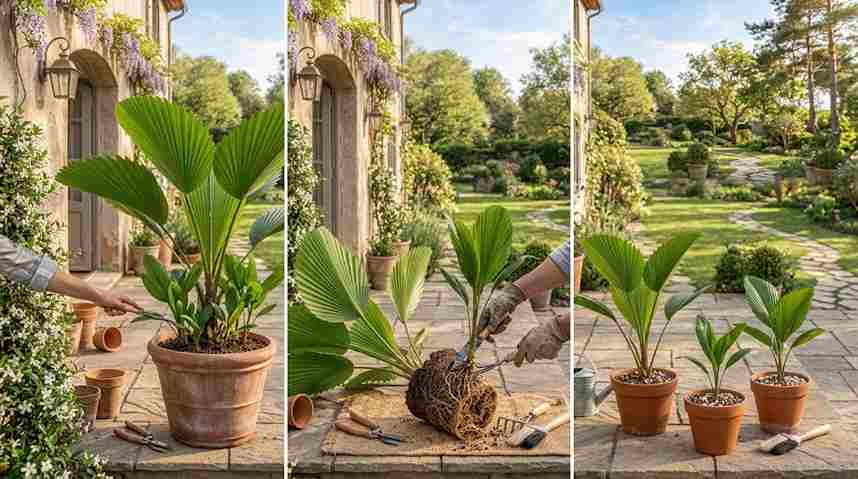
Propagation can be carried out through seeds or division of basal suckers.
Seed propagation can be relatively slow, making it less attractive for gardeners who want a larger plant quickly.
Division can be more practical when a mature plant produces suitable basal growth.
Propagating From Seed
Seeds require appropriate warmth, moisture, and patience.
Because germination and early growth can take time, seed propagation is best suited to gardeners who enjoy growing plants from an early stage.
Keep the growing medium moist but not saturated and provide suitable warmth and light after germination.
Propagating by Division
If a mature plant has suitable basal suckers, these can sometimes be separated and established as new plants.
The new division needs a healthy root system and should be planted in a suitable growing medium.
After separation, provide warmth, moisture, drainage, and bright light while the new plant becomes established.
How Fast Does It Grow?
Growth speed depends on climate, sunlight, water, soil fertility, plant age, and available space.
Under suitable tropical conditions, travel palm plant can eventually become a large landscape specimen.
North Carolina State University Extension reports that the species can reach approximately 30 to 50 feet in its native habitat over 10 to 20 years.
Growth in a container or cooler environment may be considerably slower.
Factors That Affect Growth
Healthy growth is encouraged by:
- Strong sunlight
- Warm temperatures
- Adequate moisture
- Good drainage
- Fertile soil
- Sufficient root space
- Protection from severe environmental stress
If growth suddenly slows, check these factors before assuming that the plant needs more fertilizer.
Common Travel Palm Plant Problems
Even when the basic care routine is correct, environmental problems can affect the foliage.
The most useful approach is to identify the symptoms first and then investigate the likely cause.
Yellow Leaves
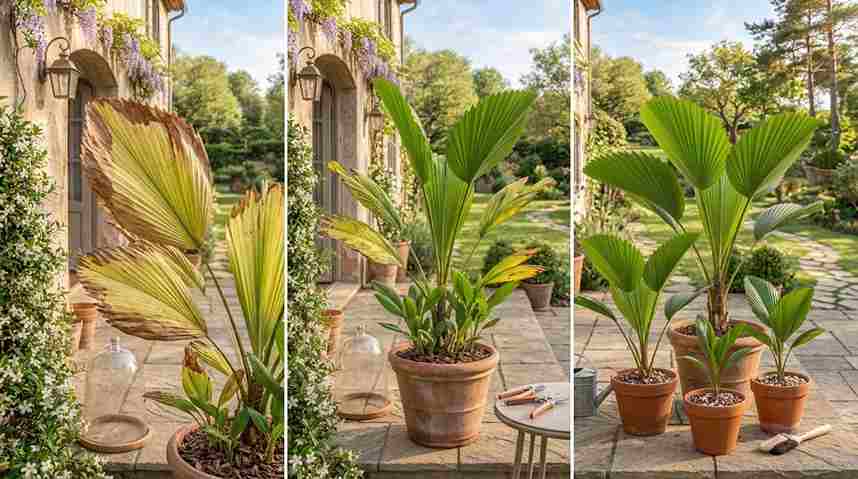
Yellow leaves can have several possible causes.
Excessive moisture, poor drainage, root stress, nutrient problems, insufficient light, or natural aging may all contribute to yellowing.
Start by checking the soil.
If it remains wet for an unusually long period, investigate drainage before increasing watering or fertilizer.
Brown Leaf Tips
Brown tips can occur when the plant experiences environmental stress.
Possible contributing factors include:
- Dry conditions
- Irregular watering
- Low humidity
- Excessive fertilizer
- Root problems
- Physical damage
Avoid changing several care factors at the same time. Check the plant’s environment and make adjustments gradually.
Drooping Leaves
Drooping leaves can be associated with underwatering, heat stress, root problems, or unsuitable growing conditions.
Check the soil moisture first.
If the soil is dry, the plant may need water. If the soil is already saturated, adding more water could worsen the problem.
This is why observing the root environment is more useful than automatically watering whenever leaves droop.
Torn or Shredded Leaves
Torn foliage is common in plants with very large leaves.
Strong winds can split or shred the leaves, particularly when the plant is grown in an exposed location.
This type of damage does not necessarily mean that the plant has a disease.
If possible, place container-grown plants in a more protected position and choose sheltered locations for outdoor planting.
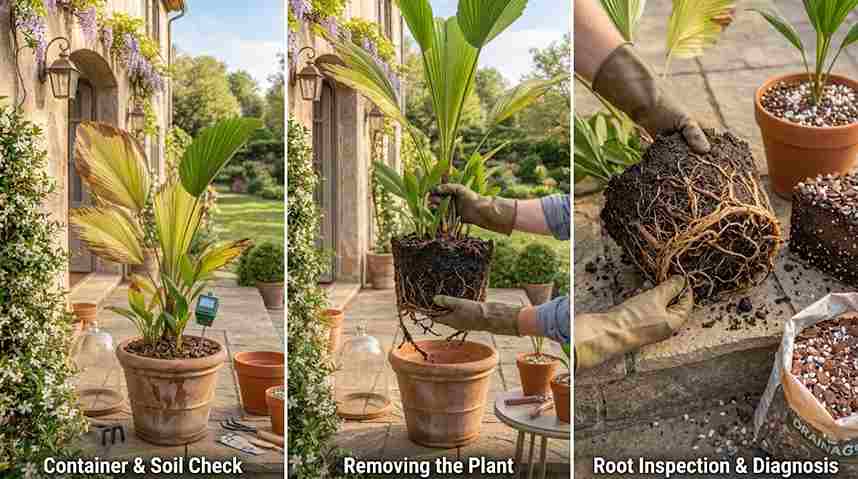
Root Rot
Root problems are more likely when soil remains excessively wet for extended periods.
Poor drainage combined with frequent watering can create conditions that are unfavorable for healthy roots.
Signs may include:
- Persistent wilting
- Yellow foliage
- Slow growth
- Unpleasant soil odor
- Declining overall appearance
If root problems are suspected, examine the soil and drainage conditions rather than immediately adding more water.
For container plants, make sure drainage holes are not blocked.
Leaf Spot Disease
Leaf spot can affect the foliage of this species.
The University of Florida IFAS identifies Cercospora leaf spot as a serious disease concern for Traveler’s Tree.
Symptoms can include spots or lesions appearing on leaves.
Reducing Disease Problems
Good general plant hygiene can help reduce disease pressure.
- Remove severely damaged foliage when appropriate.
- Keep the growing area clean.
- Avoid unnecessary overhead watering.
- Provide adequate air circulation.
- Avoid overcrowding plants.
- Monitor new symptoms regularly.
If disease symptoms continue to spread, seek advice from a local extension service or qualified plant-health professional for accurate diagnosis and treatment recommendations.
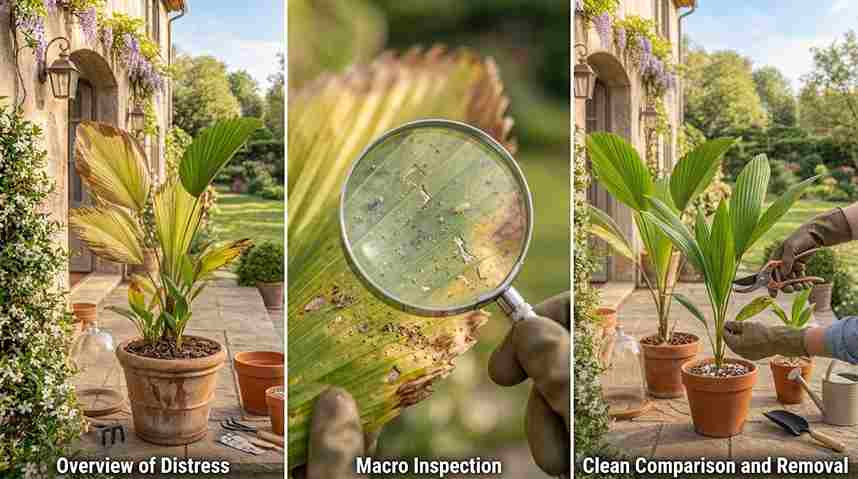
Pests and Insects
A plant can occasionally experience insect problems, especially when it is stressed.
Inspect leaves regularly for unusual spots, discoloration, sticky residue, distorted growth, or visible insects.
Early detection is easier to manage than allowing a serious infestation to spread.
If you find insects, first identify the pest before choosing a treatment. Different pests require different management approaches.
Avoid applying pesticides simply because a plant looks unhealthy. Environmental stress can produce symptoms that resemble pest damage.
Why Is My Plant Not Growing?
Slow growth does not automatically indicate a serious problem.
First evaluate the growing conditions.
Ask yourself:
- Is the plant receiving enough light?
- Is the soil staying too wet?
- Is the plant getting enough moisture?
- Are temperatures warm enough?
- Is the container too small?
- Are the roots healthy?
- Has the plant recently been moved or repotted?
Tropical plants naturally slow down when conditions become less favorable.
Correcting the underlying environmental issue is usually more useful than simply adding additional fertilizer.
How to Protect It From Strong Winds
The large leaves are visually impressive, but their size also makes them more vulnerable to wind damage.
If your garden regularly experiences strong winds, choose a location protected by suitable structures or other plants without blocking necessary sunlight.
For container-grown specimens, moving the pot to a sheltered location during severe weather can reduce physical damage.
Do not worry if an otherwise healthy leaf becomes split after a storm. Wind damage is primarily a cosmetic issue when the plant’s central growth and roots remain healthy.
When Should You Move a Container Plant Indoors?
If you are growing a young specimen in a container in a colder region, monitor local temperatures carefully.
Because the plant is tropical and frost sensitive, exposure to freezing conditions should be avoided.
Move the container to a protected environment before dangerous cold arrives rather than waiting until frost damage has already occurred.
However, indoor growing is best considered a temporary solution for young plants because mature specimens can become too large for typical indoor spaces.
Choosing and Growing a Travel Palm Plant in the USA
Choosing the right plant and understanding your local climate can make a major difference when growing a tropical species such as Ravenala madagascariensis.
The plant can become an impressive landscape feature in suitable regions, but it is not equally practical for every part of the United States. Before planting, consider your climate, available space, sunlight, winter temperatures, and long-term maintenance needs.
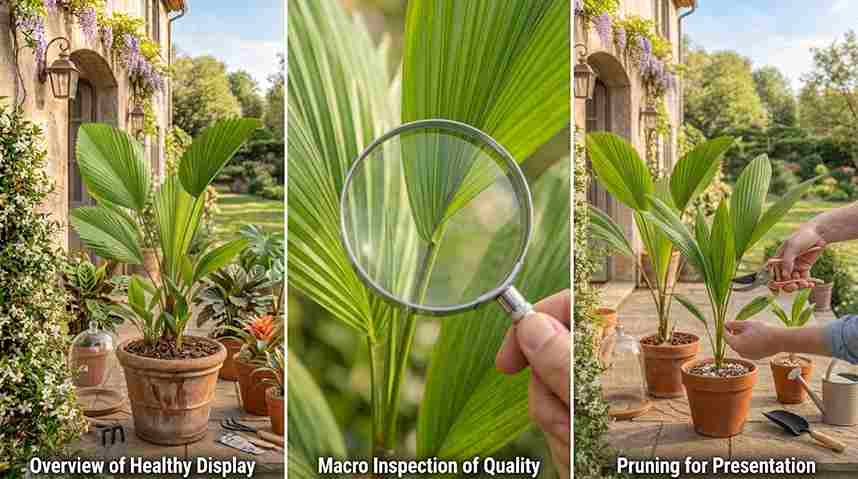
How to Choose a Healthy Travel Palm Plant
When purchasing a young travel palm plant , take a few minutes to inspect its overall condition.
A healthy specimen should have firm growth, reasonably green foliage, and no obvious signs of serious disease or pest infestation.
What to Look For
Check the following before purchasing:
- Healthy-looking green leaves
- Firm stems and growth points
- No widespread leaf discoloration
- No obvious insect infestation
- No strong unpleasant odor from the soil
- A container with adequate drainage
- A plant that appears appropriately rooted for its container
A few cosmetic imperfections do not necessarily mean the plant is unhealthy. Tropical foliage can develop minor tears or marks during transportation.
However, widespread damage, severely declining foliage, or constantly saturated soil can be warning signs.
Buying From a Nursery or Garden Center
A local nursery can be a useful place to purchase tropical plants because you can inspect the specimen before buying it.
Ask the nursery about:
- The plant’s scientific name
- How much sunlight it has been receiving
- Its recent watering routine
- Whether it has been kept indoors or outdoors
- Any known pest or disease issues
- The plant’s approximate age or size
This information can help you transition the plant into its new environment more gradually.
Buying Plants Online
Online plant shopping can provide access to tropical species that may not be available locally.
However, identification is particularly important when buying online.
Look for the scientific name Ravenala madagascariensis rather than relying only on a common name. Common plant names can vary between sellers and regions.
Before ordering, check the seller’s plant description, shipping information, plant size, and growing recommendations.
If possible, choose a seller that provides clear information about the plant and its growing requirements.
Where Should You Plant It?
Location is one of the most important decisions.
Choose a site with strong sunlight, adequate drainage, sufficient root space, and protection from damaging winds.
Avoid planting it in a narrow space simply because the young plant currently fits there.
Think About Mature Size
A young specimen can look small at a garden center, but it can eventually become a large plant.
Before planting, look upward and outward.
Consider nearby:
- Buildings
- Fences
- Utility lines
- Walkways
- Patios
- Driveways
- Other large plants
Providing enough room from the beginning makes long-term maintenance easier.
Best U.S. Regions for Outdoor Growing
The plant is best suited to warm, frost-free areas of the United States.
Extension resources generally place travel palm plant around USDA Hardiness Zones 10A through 11.
This means gardeners in parts of warm Southern and subtropical regions may have better opportunities for outdoor cultivation than gardeners in northern states.
Local microclimates can still make a difference.
A protected garden close to a warm building may experience different temperatures from an exposed location nearby. Nevertheless, gardeners should not rely on microclimates to overcome repeated freezing conditions.
Growing It in Colder States
Gardeners in colder climates can still enjoy a young plant as a container specimen.
During the warm season, the container can be placed outdoors in a suitable bright location.
When temperatures begin approaching levels that can damage tropical foliage, move the plant into an appropriate protected environment.
The Challenge of Mature Plants
The biggest limitation is size.
A young plant may be easy to move, but a mature specimen can become far too large and heavy for practical seasonal movement.
For this reason, colder-climate gardeners should think about the plant’s long-term size before purchasing one.
A greenhouse or conservatory-style growing environment may provide more realistic long-term protection than an ordinary room inside a home.
Seasonal Care
The plant’s care needs can change throughout the year.
Spring
Spring is a good time to evaluate the travel palm plant after winter.
Check for damaged leaves, inspect the soil, and gradually increase watering as active growth resumes. If the travel palm plant is container grown and needs more space, spring can also be a suitable time to consider repotting.
Before moving the plant outdoors after a colder season, make sure temperatures are consistently warm enough to support healthy growth.
Summer
Warm summer weather can encourage active growth in the travel palm plant.
Monitor soil moisture regularly, particularly when temperatures are high and rainfall is limited. Container-grown plants may dry out faster than plants growing directly in the ground.
Strong summer storms can also damage the large leaves of a travel palm plant, so consider wind exposure when selecting a location.
Fall
As temperatures begin to decline, start preparing container-grown tropical plants for colder conditions.
Check weather forecasts and avoid waiting until frost is imminent before moving a young travel palm plant into protection.
Reduce unnecessary watering if cooler conditions slow soil drying, but continue monitoring moisture rather than following the summer schedule automatically.
Winter
Winter is the most challenging season in colder regions.
Protect the plant from freezing temperatures and avoid exposing it to prolonged cold.
Indoor or protected specimens may require less water during periods of slower growth.
Always check the soil before watering to avoid keeping the roots excessively wet.Summer
Warm summer weather can encourage active growth in the travel palm plant.
Monitor soil moisture regularly, particularly when temperatures are high and rainfall is limited. Container-grown plants may dry out faster than plants growing directly in the ground.
Strong summer storms can also damage the large leaves of a travel palm plant, so consider wind exposure when selecting a location.
Travel Palm Plant Care: Quick Reference
| Care Factor | Recommended Approach |
|---|---|
| Light | Full sun is generally preferred |
| Water | Maintain consistent moisture without waterlogging |
| Soil | Fertile, organic-rich, well-drained soil |
| Temperature | Warm conditions; protect from freezing |
| Humidity | Moderate to high humidity is beneficial |
| Fertilizer | Use according to product directions during active growth |
| Pruning | Remove dead or severely damaged foliage |
| Wind | Provide protection from strong winds |
| Space | Allow room for mature growth |
| Containers | Useful for young plants and cold climates |
Frequently Asked Questions
Is a travel palm plant actually a palm?
No. Although it looks like a palm, Ravenala madagascariensis belongs to the Strelitziaceae family rather than the true palm family.
Its palm-like appearance comes from its tall growth and dramatic fan-shaped leaves.
How much sunlight does it need?
It generally performs best in full sun.
Young container-grown plants can tolerate some shade, but strong light is beneficial for healthy growth.
How often should I water it?
There is no universal schedule.
Water when the plant needs moisture and adjust frequency according to temperature, rainfall, soil, container size, and season.
The soil should remain appropriately moist without becoming permanently saturated.
Can it grow indoors?
Young plants can be grown in protected environments for a period of time.
However, this is not an ideal permanent houseplant for most homes because mature plants can become very large.
Can I grow it in a pot?
Yes.
Container growing is particularly useful for young specimens and gardeners who need to protect the plant from cold weather.
The container should have adequate drainage and enough space for healthy root development.
Why are the leaves turning yellow?
Yellow leaves can have multiple causes, including excessive moisture, poor drainage, root stress, insufficient light, nutrient problems, or natural aging.
Check the soil and growing conditions before changing your watering or fertilizer routine.
Why are the leaves turning brown?
Brown tips or edges can develop because of environmental stress, dry conditions, inconsistent watering, low humidity, fertilizer buildup, or physical damage.
Look at the entire growing environment rather than assuming there is one single cause.
Why are the leaves splitting?
The broad leaves can split naturally when exposed to strong winds.
Torn foliage does not automatically mean the plant is diseased.
A sheltered growing location can reduce wind damage.
Is it easy to grow?
Travel palm plant can be relatively straightforward in a warm climate when its basic needs are met.
The biggest challenges are usually cold temperatures, mature size, adequate space, and maintaining suitable moisture and drainage.
How large can it become?
The plant can become very large under suitable conditions.
North Carolina State University Extension reports heights of approximately 30–50 feet in its native environment, while landscape size can vary depending on climate and growing conditions.
Can It Survive Frost?
The travel palm plant is frost sensitive and should not be considered a cold-hardy landscape plant.
Gardeners in areas with freezing winters should consider container growing or protected cultivation. Protecting a young travel palm plant from freezing temperatures can help reduce cold-related damage.
Where Does It Come From?
The travel palm plant is native to Madagascar.
Its tropical origin explains why the travel palm plant prefers warmth, moisture, and bright growing conditions. Understanding its natural habitat can help gardeners provide more suitable care.
Is It Poisonous?
Available horticultural references do not generally describe the travel palm plant as a common poisonous landscape species. However, gardeners should avoid assuming that any plant material is safe to eat simply because it is grown ornamentally.
If you grow a travel palm plant around your home, keep unfamiliar plant material away from children and pets. Never encourage anyone to eat ornamental plant parts unless their safety has been properly confirmed.
If accidental ingestion occurs, consult a qualified medical or poison-control professional for appropriate guidance.
Final Thoughts
The travel palm plant is a remarkable tropical specimen with an appearance unlike most ordinary garden plants.
Its enormous fan-shaped leaves, unusual growth habit, and Madagascar origin make it an especially interesting choice for gardeners who enjoy tropical landscapes.
Successful cultivation starts with choosing the right environment. Provide strong light, warm temperatures, fertile and well-drained soil, consistent moisture, and enough space for mature growth. In areas where freezing temperatures occur, consider growing young specimens in containers or another protected environment.
It is also important to remember that this plant is not a true palm. Understanding its botanical identity helps gardeners provide the travel palm plant with suitable care rather than applying advice intended for completely different palm species.
Whether you are growing a young specimen in a container or establishing a mature plant in a warm landscape, paying attention to its natural tropical requirements can help it remain healthy and attractive.
With thoughtful planning and consistent care, a travel palm plant can become a dramatic focal point for a suitable garden.
Authoritative Sources for Further Reading
For additional botanical and horticultural information about the travel palm plant, readers can consult university extension resources such as North Carolina State University Extension and University of Florida IFAS. These trusted resources provide helpful information about the plant’s identification, growing requirements, landscape use, climate suitability, diseases, and potential problems.
Gardeners researching travel palm plant care can use these resources to verify information about sunlight, watering, soil, temperature, mature size, and suitable growing regions. University extension publications are especially useful because growing conditions can vary significantly across different parts of the United States.
If you are planning to grow a travel palm plant outdoors, checking reliable horticultural information before planting can help you choose an appropriate location and understand the plant’s long-term requirements. These sources can also help gardeners identify common problems and make informed decisions about plant care.
For gardeners growing a travel palm plant in a container, extension resources can provide additional guidance about climate protection, watering, drainage, and seasonal care. Using reliable horticultural information alongside careful observation of your own plant can make long-term travel palm plant care easier and more successful.
These sources are especially useful when checking plant identification, climate suitability, disease concerns, and long-term care recommendations.